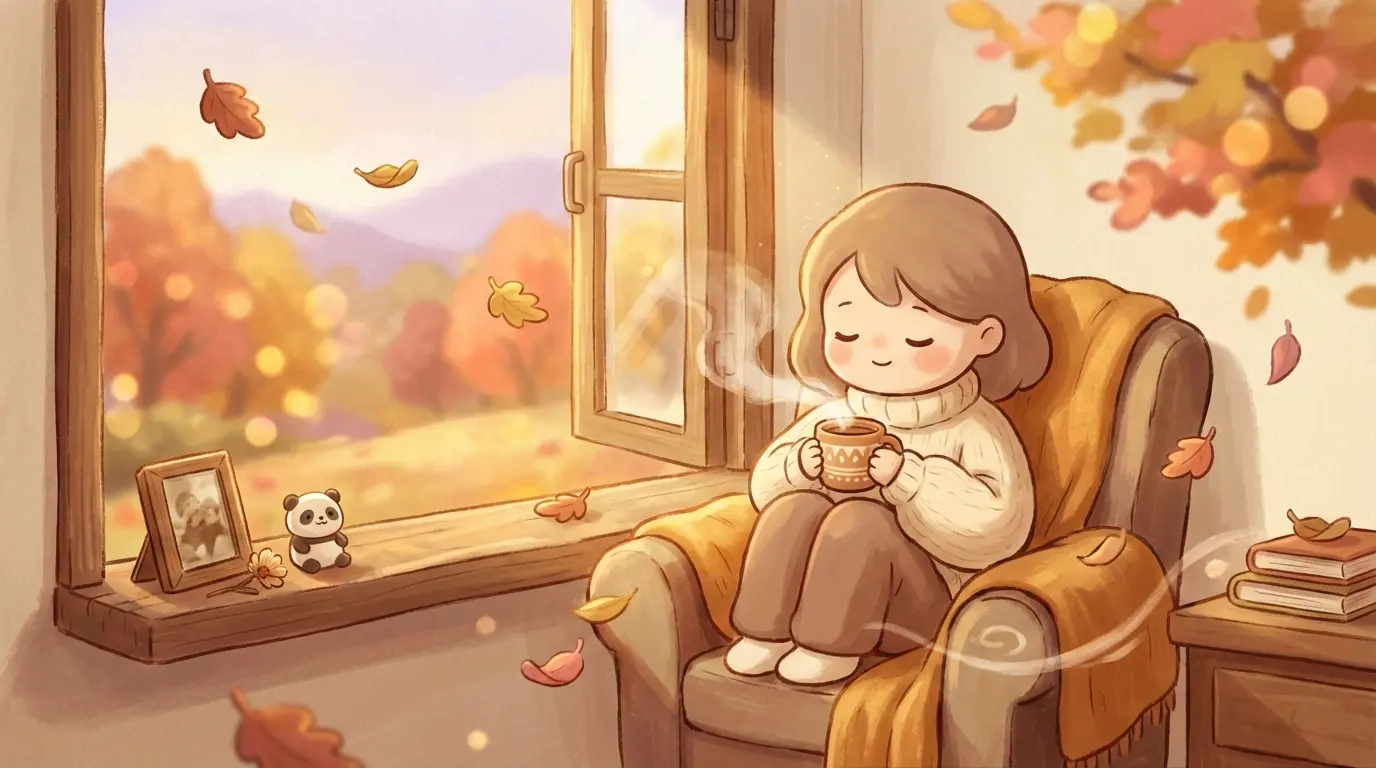
Why We Only See Beauty When It’s Gone
Your brain is designed to ignore what you have. Neuroscience explains why we only value things when we lose them — and how to wake up before it’s too late.
When life becomes beautiful when we lose it
Have you noticed how your favorite cookie tastes different when you know it’s the last one in the box? Or how that song you’ve listened to a thousand times suddenly breaks your heart when you find out the artist died?
It’s strange. We spend years, months, maybe decades experiencing something every day, and suddenly, when we know it’s ending, it’s as if we’re seeing it for the first time. As if we had been living with half-closed eyes and someone just turned on the light.
But if we can only see beauty when it’s leaving, it means we’re missing an entire lifetime of extraordinary moments disguised as ordinary.
Your brain, the silent thief of moments
To understand why we live like this, you need to meet your brain. And there’s bad news: it’s working against you when it comes to valuing what you have.
It turns out it’s designed to get used to everything. Scientists call it hedonic adaptation : the tendency of our nervous system to return to an emotional neutral point no matter how incredible what happens to us is. It’s as if your brain were that friend who says, “okay, yeah, we get it” after you tell the same exciting story for the third time.
It’s a brilliant survival function. It allows you to keep functioning, searching, moving forward. But the price is high: you stop seeing the magic in what you already have.
That’s why the new house you dreamed of becomes just “home” after a few months. That’s why the relationship that once had you floating on clouds is now your Tuesday routine. Your brain isn’t being cruel — it’s being efficient. But in the process, it steals your ability to be amazed by your own life.
The moment everything changes
And then it happens. That moment we all know but nobody wants to live.
The doctor who tells you that you have to move because of work. The last day of classes with your lifelong friends. The call saying your grandmother is in the hospital. The text message that says, “we need to talk.”
Suddenly, as if someone adjusted a screen’s contrast, everything looks sharper, more intense, more valuable. It’s waking up from a dream and realizing you’ve been sleepwalking through your own life.
Have you noticed how the days before a trip feel different? How every corner of your city comes alive when you know you’re about to move? It’s not nostalgia — it’s your brain finally paying attention to what was always there.
Researchers like Mary-Frances O’Connor , a neuroscientist at the University of Arizona, have discovered that when we lose something or someone, the same areas of the brain that process physical pain become active. Your brain literally hurts. But at the same time, areas related to memory and emotional evaluation light up like never before. It’s as if loss were the switch that turns on all the lights that had been off.
The small endings that go unnoticed
You don’t need to wait for major tragedies to experience this. Your life is full of small endings that could wake you up if you knew how to recognize them.
The last morning coffee before changing jobs. The last late-night conversation with your sister before she gets married and everything changes. The last hug from your child before they start preferring video games over your arms. The last time your parents carry you, without anyone realizing it’s the last time.
These micro-endings are gifts disguised as routine. They force you to stop, to really look, to feel the exact texture of that moment before it fades. But only if your eyes are open to see them.
The problem is that we live on autopilot, unconsciously waiting for someone to tell us when it’s “the last time.” But nobody does. Endings rarely come with advance notice.
The wisdom we already knew
The Japanese have a word that captures this perfectly:
"Mono no aware: the bittersweet awareness of the impermanence of all things. That melancholic and beautiful feeling of knowing that nothing lasts forever, and that precisely because of that, everything is precious.
It’s not sadness — it’s a deep appreciation of the beauty that comes with the temporary. Like watching leaves fall in autumn knowing that each one represents a unique moment that will never repeat.
Your brain can get used to your partner, but it can’t get used to the fact that one day one of you won’t be here. It can normalize your job, but it can’t normalize that this specific stage of your life, at this exact age, in this particular moment, will never happen again.
Impermanence is not the enemy of happiness — it’s its greatest ally. It’s what gives weight to every moment, flavor to every experience, urgency to every hug.
Waking up without waiting for the alarm
What if we could see beauty without waiting for goodbye? What if we could trick our brain into waking up before it’s too late?
The good news is that we can. And it doesn’t require complicated techniques or years of therapy.
Research like that of Robert Emmons at UC Davis shows that people who practice active gratitude experience something similar to those moments of clarity that come with loss. It’s not about saying “thank you” out of obligation, but about stopping and consciously absorbing what you have.
Create small doses of finitude
Slightly break the routine
Imagine it’s the last time
According to a study by the UNAM , gratitude works as a protective factor against stress and depression. It’s not just a nice exercise — it has measurable effects on brain structure, according to research from the UCLA Mindful Awareness Research Center .
The life you already have
Maybe the secret isn’t avoiding losses or waiting for them to wake us up. Maybe it’s learning to live as if we already knew everything is temporary. Because it is.
Your morning coffee, your best friend’s laugh, the way light comes through your window at 3 p.m., that book you’re reading, this conversation you’re having with yourself as you read these words.
All of this will end someday. And precisely because of that, all of this is extraordinary right now.
You don’t need to wait to lose something to truly see it. You don’t need time to run out for time to become valuable. You can choose to see it now. You can choose for your next “normal” day to be extraordinary, simply because you decided to pay attention.
Because life doesn’t become beautiful when you lose it. Life is already beautiful. You just need to open your eyes before it’s too late to enjoy it.
Don’t wait until tomorrow
If someone crossed your mind while you were reading this, send them a virtual hug now. Take 30 seconds.
Send a HugSources and References
These are the sources that support what is presented in this article:
Neuroscience of Hedonic Adaptation
- Sonja Lyubomirsky, UC Riverside: “Hedonic Adaptation to Positive and Negative Experiences” — Theoretical model of how we emotionally adapt.
- ScienceDirect: “On the causes and consequences of hedonic adaptation” — Evolutionary model of hedonic adaptation.
- faircompanies: “Combatir la adaptación hedónica apreciando lo que se tiene” — Popular analysis of the phenomenon.
Neuroscience of Grief and Loss
- Mary-Frances O’Connor, University of Arizona: The Grieving Brain: The Science of Love and Loss — How the brain processes grief according to neuroimaging.
- American Heart Association: “How grief rewires the brain and can affect health” — Impact of grief on the stress response.
Psychology of Gratitude
- UNAM, Faculty of Psychology: “La gratitud, conciencia y apreciación de lo significativo y valioso” — Gratitude as a protective factor against stress.
- IEPP: “El Poder de la Gratitud” — Research by Robert Emmons (UC Davis) and UCLA on gratitude and brain structure.
- Elena Miró, University of Granada: “El poder de la gratitud” — Meta-analysis of gratitude interventions.
You might also like
Despite Everything, Life Is Still Beautiful
Your brain is designed to absorb the bad and let the good slip by. But there is a way to reverse that — and it starts with the smallest moments.
Read more
The People You Can’t Keep
Your brain can only keep about 150 people close. That explains why we lose people without meaning to — and why a timely message can change everything.
Read more