
The Science of Hugs: Human Touch Is Medicine
What happens to your body when someone hugs you for 20 seconds: oxytocin, cortisol, and why science says hugs are real medicine.
The WHO has been warning for years about a silent epidemic of loneliness affecting millions of people. And it turns out that one of the most effective remedies is also the simplest: a hug.
It’s not a metaphor. Neuroscience has been studying for decades what happens inside your body when someone hugs you, and the results are surprising.
What happens in your body when you receive a hug
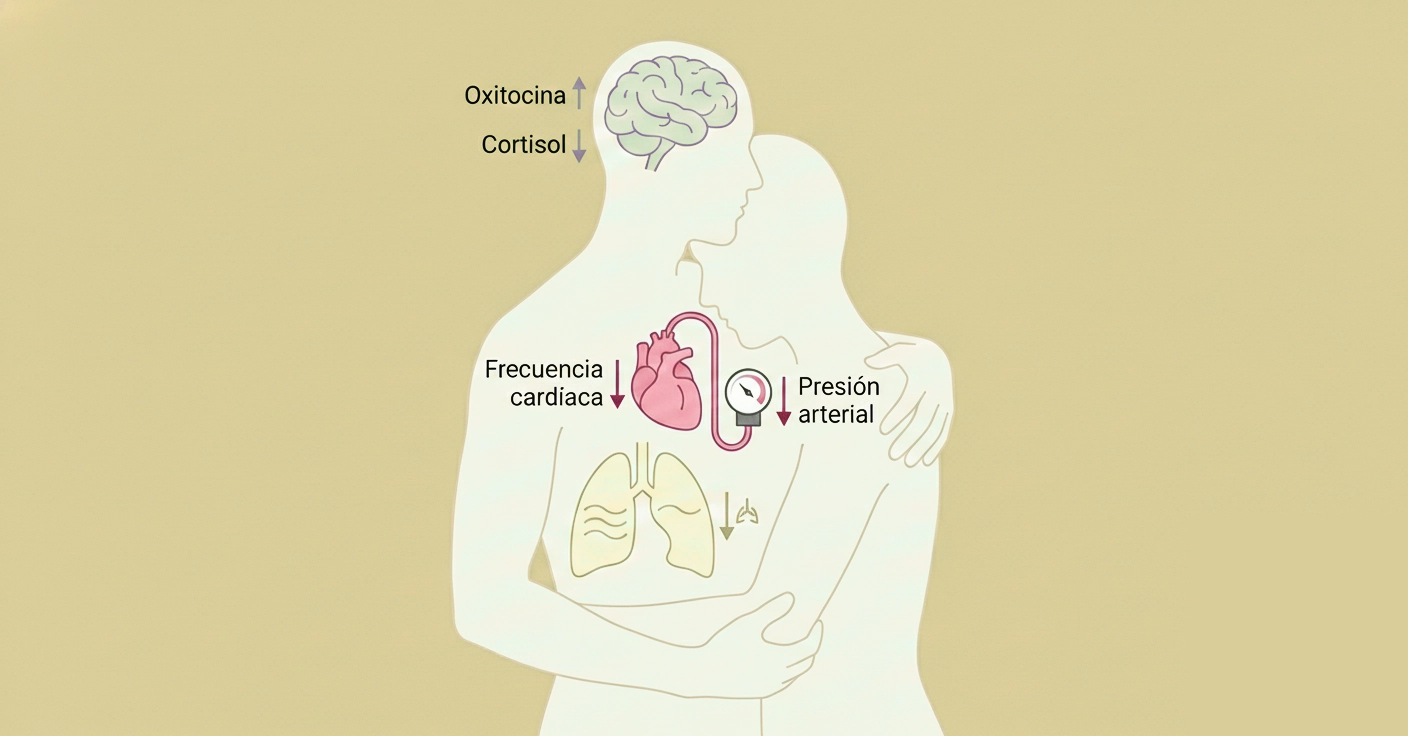
When someone hugs you, your body triggers an almost instantaneous chemical reaction. It’s not just that it “feels good” — it’s a specific biological mechanism that impacts your physical and emotional health.
📈 What you activate: Oxytocin
Known as the “bonding hormone,” this substance floods your brain, generating deep sensations of safety and belonging. It’s your body’s natural antidote to loneliness.
📉 What you reduce: Cortisol
At the same time, production of the “stress hormone” slows down. Your nervous system leaves alert mode and enters recovery and calm.
This exchange produces immediate effects:
- Vital regulation: Blood pressure drops and heart rate stabilizes.
- Wellbeing cocktail: Endorphins, serotonin, and dopamine are released, reducing pain and improving mood.
- Calm signal: The nervous system interprets touch as a sign of safety.
The 20-second rule
Not all hugs have the same impact. Science suggests that duration is key:
"A hug must last at least 20 seconds to fully activate the release of oxytocin. It’s the time the body needs to understand that it can lower its guard.
A brief greeting is social; a hug that lasts 20 seconds is therapeutic. That’s the difference UNC researchers found when measuring how the body responds to stress.
Does it matter who hugs you?
Yes. Your brain processes touch based on the emotional bond you have with the person:
The trust factor 🤝
The stress response 🛡️
Brain synchrony 🧠
For the “wellbeing cocktail” (oxytocin and dopamine) to be fully released, the brain needs to identify the other person as safe. Without intention or genuine affection, the chemistry simply doesn’t activate the same way.
What your health gains from regular touch
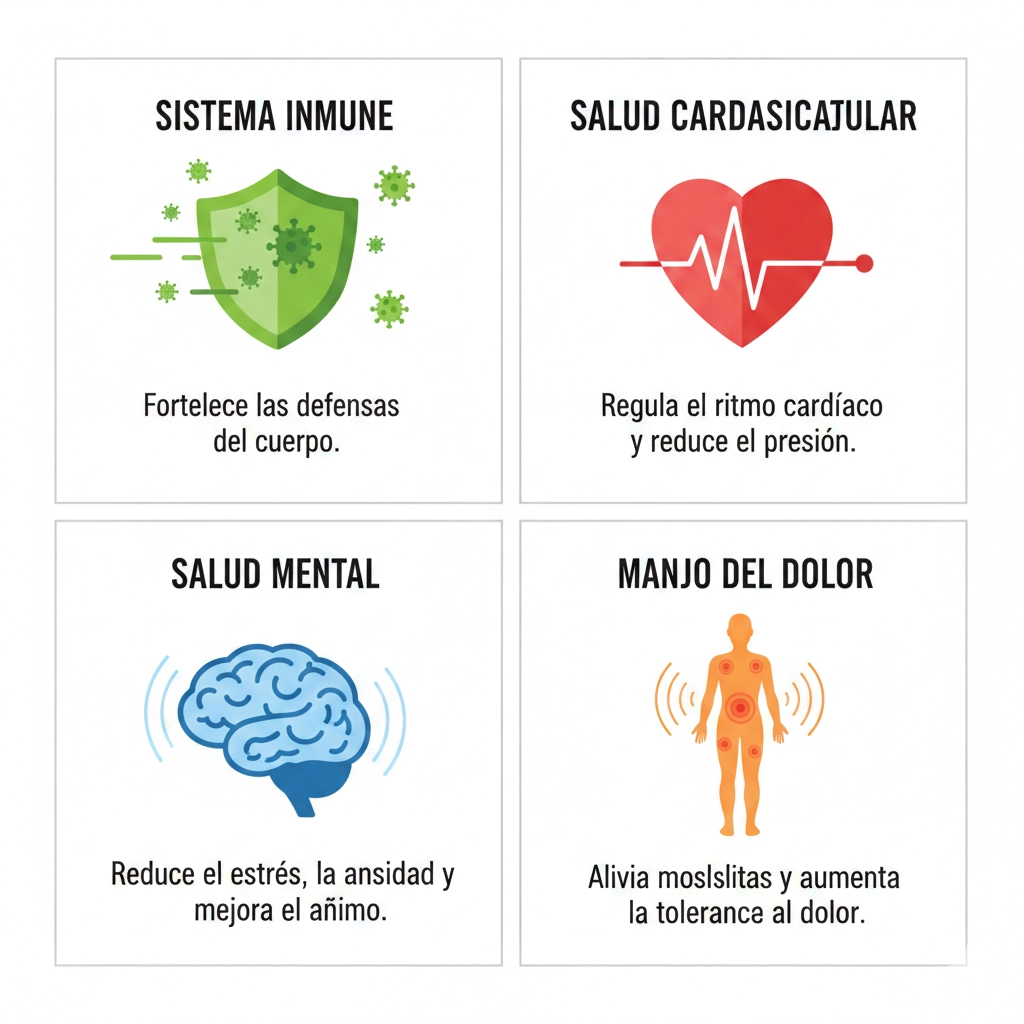
Hugging frequently doesn’t just feel good in the moment — it has cumulative effects that science has measured:
Skin hunger: A biological need
There’s a name for what you feel when you go too long without being touched: “skin hunger.” And it’s not an exaggeration. A study in PLOS ONE conducted during the pandemic found that people deprived of physical contact reported more anxiety, worse sleep, and a greater tendency toward depression.
It makes sense if you think about it: our skin is the largest organ in the body, with around 5 million touch receptors. When most of our interactions happen through a screen, those receptors go unstimulated. And the body notices — in the form of irritability, insomnia, or that diffuse feeling that something is missing.
Although it’s instinctive, you can enhance its effects:
- Full presence: Put the phone away. Attention multiplies the benefit.
- Breathing: Take deep breaths; you invite the other person to synchronize with you.
- Consent: The hug that heals is the one both people want.
Hugs throughout life
The need for touch has no age limit. It’s a common thread throughout our existence.
Childhood and Development
Essential for secure attachment and healthy emotional regulation from birth.
Adolescence
Even if they don’t always ask for it, teenagers need that safe refuge as much as children do.
Adult Life
The most accessible resource to combat daily stress and reconnect with others.
Older Age
Vital to combat isolation. Often those who need contact the most receive it the least.
A simple and accessible resource
Family therapist Virginia Satir summed it up with a memorable phrase: we need 4 hugs a day to survive, 8 to maintain, and 12 to grow. Most adults barely reach one or two.
You don’t need money, extra time, or special skills. Your mom, your partner, your friend, your sibling… they probably all need a hug today. And so do you.

At the end of the day
Science confirms what we already sensed: hugs are real medicine. Oxytocin, reduced cortisol, immune protection — all of that happens in something that lasts 20 seconds and costs nothing.
If you have someone nearby, hug them a little longer than usual today. Not in passing, but for real.
And if you’re alone? There’s the butterfly hug technique, used in EMDR therapy: cross your arms, place each hand on the opposite shoulder, and give gentle alternating taps. It seems simple, but it activates similar calming responses in the nervous system. Your body responds to care, no matter where it comes from.
Send a hug to someone who needs it
You don’t need to be close to make someone feel they matter. A virtual hug takes 30 seconds.
Send a HugBibliography and Academic Sources
These are the scientific and popular sources supporting what is presented in this article:
Neuroscience and Biochemistry of Bonding
- Complutense University of Madrid: “From breastfeeding to social bonds: this is how oxytocin works”
- Institute of Neurosciences (CSIC-UMH): Oxito-Cure Project: the oxytocinergic system as a therapeutic target
The 20-Second Rule and Stress
- University of North Carolina (via Mutua Navarra): Study on 20-second hugs and oxytocin levels (PDF)
- National Geographic Spain: “Benefits of hugging for our health according to science”
Impact on Physical Health and Development
- Psychological Science (via BeHealth): Hugs and their multiple health benefits
- TecSalud (Tec de Monterrey): The power of the hug: 7 reasons to give hugs
- MAPFRE Health Channel: Hug therapy and organic benefits
Contact Deprivation and Public Health
You might also like

Despite Everything, Life Is Still Beautiful
Your brain is designed to absorb the bad and let the good slip by. But there is a way to reverse that — and it starts with the smallest moments.
Read more
How a simple gesture can change your entire day
A message, a smile, or a hug triggers a chemical cascade in your brain that can change your whole day. Neuroscience explains why — and how you can be that gesture for someone.
Read more