The People You Can’t Keep
Your brain can only keep about 150 people close. That explains why we lose people without meaning to — and why a timely message can change everything.
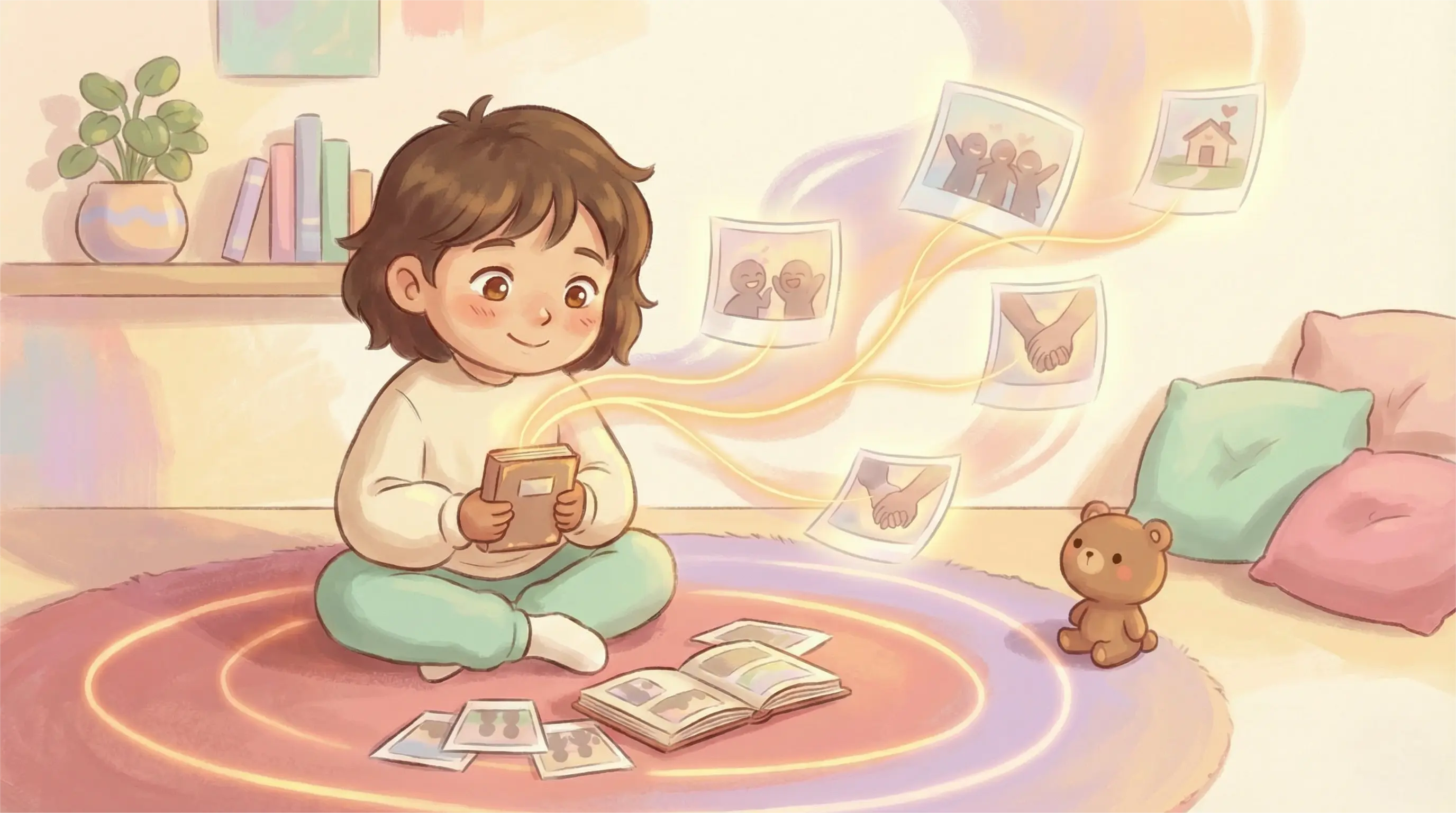
Sometimes you’re scrolling through social media and suddenly you see an old photo, or you hear a song, and you remember someone you hadn’t thought about in years. Just for a second. As if someone had turned on a light in a room you hadn’t visited in a long time.
And in that second you feel something. It’s not exactly sadness. It’s something softer. Like touching the edge of a memory that no longer belongs to you in the same way.
What you didn’t know is that this moment has a very human explanation. And it has a lot to do with how your brain handles connections with other people.
The brain can’t handle everyone
Have you ever wondered why there are people who, over time, simply disappear from your life without anyone having done anything wrong? It’s not because you didn’t matter to them. It’s because your brain, quite literally, has a limit.
Anthropologist Robin Dunbar , from the University of Oxford, discovered that the size of our neocortex only allows us to maintain around 150 meaningful relationships. Not 150 acquaintances — 150 people you actually have a bond with, people you know something about, people you could sit down and talk to without it being awkward.
But within those 150, not everyone occupies the same place. It’s as if you had a round table in your head with layers of chairs:
According to Dunbar’s research, our relationships are organized in concentric circles, each one approximately three times larger than the previous:
- 5 people — Your inner circle. The ones you talk to almost daily, the ones you turn to in a crisis.
- 15 people — Close friends. People you share real things with.
- 50 people — Good acquaintances. People you’d invite to a party.
- 150 people — Your active social limit. Beyond this, bonds start to fade.
When life brings new people, some chairs quietly become free without you realizing it. It’s not a decision you make. It’s something that simply happens.
And it’s not just about how many people you know. It’s about how much energy your mind can devote to each one. The ones who occupy that closest circle — those five chairs — are the people with whom you maintain a deep connection. You think about them. You feel them close, even when they’re far away.
Why we forget without meaning to forget
It’s no coincidence that when you stop talking to someone for a long time, that person starts to blur in your mind. Your brain isn’t an archive where everything is stored forever. It’s more like a garden: what isn’t watered slowly dries up.
Every time you think about someone, imagine them, or mention them in a conversation, you’re “watering” that memory. You’re keeping it alive. But when contact disappears, when life pulls your attention elsewhere, that memory starts to lose color. Not all at once. Gradually.
Neuroscience confirms it: forgetting isn’t a system failure, it’s a feature. Researchers like Paul Frankland have discovered that the brain generates new neurons in the hippocampus that literally displace old memories to make room for more recent information. Your brain bets on what you need now, not on what you needed five years ago.
"Your mind doesn’t forget out of carelessness. It forgets in order to keep connecting.
And this doesn’t mean that person wasn’t worth it. It means your mind is doing what it has always done: trying to function with the resources it has. It’s not betrayal. It’s simply how we’re made.
The people who become invisible
Maybe as you read this you’re thinking of someone like that. That person you met in college and shared something important with. Or that coworker who made you laugh on the hardest days. Or someone you met on a trip and who, in that moment, felt like they would stay forever.
Sometimes they leave for very simple reasons. Someone gets a new job. Someone moves away. Life goes on and time does what it always does: it separates.
And the strangest part is that, despite living in an era where you can find almost anyone on a screen, there are people who simply seem to have disappeared. As if the world were bigger than it looks. As if, at some point, that person stopped being in the version of life you’re living now.
Small gesture, real connection
But there is something you can do. Something very simple that has a power you might not imagine.
Think of that person who pops into your mind out of nowhere. The one you haven’t seen in years, but when you remember them you feel that at some point they were important to you. You don’t have to do anything big:
Not with fear. With love.
It doesn’t have to be the person you spent the most time with. Or the one who knows you best. It can be someone who simply, at some point in your life, made you feel okay. That you didn’t need to explain yourself. That you could be there without fear of being judged.
It’s as if the world were reminding you, in the quietest way possible, that those connections were real. That they don’t disappear in the same way ink disappears from paper under the sun.
Time is unforgiving, we know that. But it doesn’t have to scare us. It can be the reason why today, in this moment, we decide not to let someone who mattered turn into just a memory that no one waters.
So if someone just appeared in your mind while you were reading this, maybe that’s the sign you needed.
Reconnect today
Send a virtual hug to that person who crossed your mind. It’s simple, fast, and meaningful.
Send a HugSources and References
Social Neuroscience and Cognitive Limits
- Robin Dunbar, University of Oxford: “Dunbar’s number: why my theory that humans can only maintain 150 friendships has withstood 30 years of scrutiny” — Dunbar himself explains the layers of social relationships.
- Psychology and Mind: “Dunbar Number: what it is and what it tells us about human societies” — Popular analysis of the concept.
Neuroscience of Memory and Forgetting
- TIME (Corinne Purtill): “The New Science of Forgetting” — Paul Frankland’s research on neurogenesis and memory displacement.
- Columbia University, Department of Psychiatry: “Why Forgetting is Good for Your Memory” — Forgetting as an adaptive mechanism.
- PMC / National Library of Medicine: “The Biology of Forgetting — A Perspective” — Molecular mechanisms of active forgetting.
Social Connection and Wellbeing
- Infobae: “How small gestures strengthen the bonds that protect mental health” — Impact of everyday gestures on mental health.
You might also like

Despite Everything, Life Is Still Beautiful
Your brain is designed to absorb the bad and let the good slip by. But there is a way to reverse that — and it starts with the smallest moments.
Read more
The Science of Hugs: Human Touch Is Medicine
What happens to your body when someone hugs you for 20 seconds: oxytocin, cortisol, and why science says hugs are real medicine.
Read more